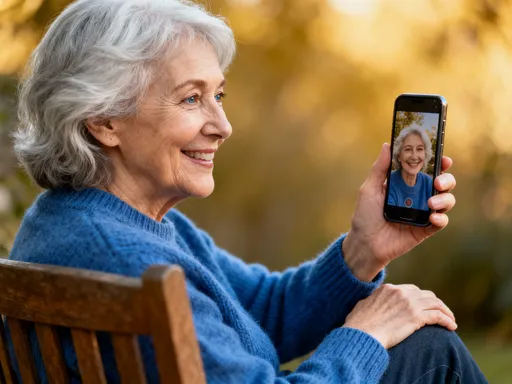
Imagine watching someone you love hesitate every time a camera comes out—hands fumbling, smile forced, voice saying, “I’m not photogenic anymore.” This was my grandma, once vibrant and proud, now shrinking from photos as if they judged her. Then we discovered simple photo editing apps. Not for filters or fame—but to restore her joy, one edited smile at a time. It wasn’t about changing her appearance; it was about returning her dignity, connection, and delight in being seen. What started as a small experiment turned into a quiet revolution in her self-worth—and in our relationship.
The Moment That Changed Everything
It was a regular Sunday dinner—roast chicken, mashed potatoes, the usual chatter about school, work, and who forgot to water the plants again. My cousin pulled out her phone. “Group photo!” she announced, holding the camera high. Everyone scooted closer, grinning. Everyone except Grandma.
She shifted in her seat, tugging her floral scarf a little higher. “Oh, do we have to?” she murmured. “I don’t look good in pictures these days.” Her voice wasn’t angry—just tired, almost apologetic, like she was burdening us by existing in the frame. I watched her eyes dart away from the lens, her hands folding neatly in her lap as if trying to disappear.
That moment stayed with me. Not because it was dramatic, but because it was so common. How many times had I seen her step back when someone raised a phone? How often had she let others go first, until the photo session ended and she was left out entirely? It wasn’t just about vanity. It was deeper—about feeling unseen, unimportant, like time had quietly erased her from the story.
I didn’t want to push. I didn’t want to say, “Come on, you look fine!” because that wasn’t the point. The point was, she didn’t feel fine in those images. The flash caught the shadows under her eyes, the lines that told decades of laughter and loss, the slight tremble in her hands when she held the phone. And in that split second, all she saw was what she’d lost—not what she still had.
That night, I searched for something—anything—that could help. Not heavy editing software with sliders and layers, not tools made for influencers or teens chasing likes. I wanted something gentle, intuitive, kind. Something that didn’t hide her but helped her feel more like herself in a photo. And that’s when I found it: a photo app designed not for perfection, but for presence.
Why Photos Matter More Than We Think
We take pictures to remember. But for older adults, photos do more than preserve memories—they affirm identity. When Grandma was younger, she was in nearly every family photo. There she is at the beach in a polka-dot swimsuit, arms around her sisters. There she is holding my dad as a baby, sunlight in her hair. Those images weren’t just moments—they were proof: I was here. I mattered. I belonged.
But as the years passed, her presence in photos faded. Not because she wasn’t there—she was always at the table, always telling stories, always passing around the dessert plate—but because she stopped letting herself be seen. She’d say, “You go ahead,” or “I’ll take the next one,” but the next one never came. And slowly, she began to vanish from the visual story of our family.
That’s when I realized: avoiding photos isn’t just about looks. It’s about self-worth. It’s about looking at a picture and not recognizing the person staring back. The face in the photo might have more lines, more shadows, less brightness—but the soul behind it is the same. The problem isn’t aging. The problem is how aging is captured: in harsh lighting, unflattering angles, and quick snapshots taken without thought.
Photos can either wound or heal. A bad one can make someone feel invisible. A kind one—soft, warm, true—can say, “You’re still here. We still see you.” That’s what we wanted. Not airbrushed perfection. Not a younger version of her. Just a photo where she could look at herself and say, “Yes, that’s me. And I’m okay with that.”
That’s where technology stepped in—not to fix her, but to honor her. A well-designed photo app didn’t change who she was. It just made it easier for her to see herself clearly again, without the distortion of bad lighting or shaky hands. It wasn’t magic. It was mercy.
Choosing the Right App: Simplicity Wins
At first, I downloaded every photo app I could find. Some were full of glittery filters and cartoon effects—fun, but not what we needed. Others had dozens of tools: sharpen, blur, hue, saturation. I opened one and saw a screen full of sliders. “Where do I even start?” I asked myself. If I was confused, how would Grandma ever use it?
Then I found one that was different. The home screen had three big buttons: Brighten, Smooth, and Enhance. That’s it. No jargon. No hidden menus. When you tapped “Brighten,” the app automatically adjusted the lighting on the face, lifting shadows under the eyes and around the mouth. “Smooth” gently softened fine lines without erasing them—like a soft focus lens, not a digital eraser. “Enhance” balanced the colors, making skin tones look natural, not orange or gray.
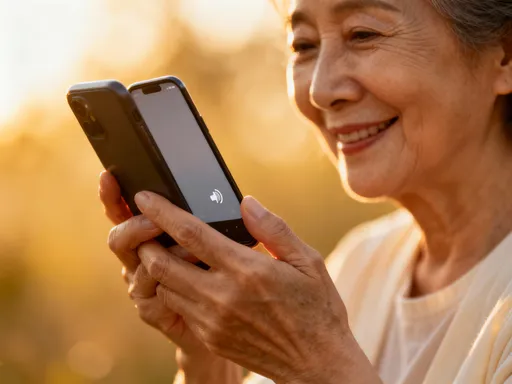
The best part? It had voice guidance. “Tap once to brighten your photo,” a calm voice would say. “Double tap to undo.” No reading tiny instructions. No guessing. Just simple, clear steps. And it worked on older phones, too—not just the latest models. That mattered. Grandma wasn’t going to buy a new phone just to edit a picture.
The first time we used it together, we pulled up a photo from last year’s Thanksgiving. The lighting was terrible—fluorescent overheads casting greenish shadows. Grandma’s smile was real, but her face looked tired, almost gray. I tapped “Brighten.” Instantly, the warmth returned to her skin. Then “Smooth”—just a little. The lines were still there, but they didn’t look so deep. “Oh,” she said, leaning closer. “That’s… better.”
It wasn’t about lying. It wasn’t about pretending she hadn’t aged. It was about removing the things that weren’t her—the bad lighting, the camera shake, the unkind angle. She looked like herself, but rested. Like she’d had a good night’s sleep, like the sun was on her face. And for the first time in years, she didn’t look away.
Learning Together: A Bond Beyond Technology
Teaching Grandma to use the app wasn’t a one-time lesson. It became our thing. Every Thursday morning, I’d bring over coffee—hers with extra cream, mine black—and we’d sit at her kitchen table with her phone between us. “Okay,” I’d say, “today we’re going to try editing a selfie.” She’d laugh. “A selfie? At my age?” But she’d do it.
At first, I did most of the tapping. She watched closely, asking questions: “Why does it get brighter when I press that?” “Can I make it go back if I don’t like it?” I explained in simple terms: “The phone sees your face and knows where the shadows are. It just helps lift them.” No technical terms. No “algorithms” or “pixel enhancement.” Just, “It’s like turning on a soft lamp right in front of you.”
Then came the day she did it alone. I was pouring cream into my coffee when she said, “I think I’ve got it.” I turned. She was tapping the screen with steady fingers. Brighten. Smooth. A tiny adjustment. She smiled. “It looks like me. But like the me from Sunday lunch, not the me from midnight.”
That moment wasn’t about the app. It was about pride. It was about control. It was about her saying, “I can do this,” and meaning it. I felt tears prick my eyes. Not because it was hard, but because it was so simple—and so powerful.
What surprised me most was how much I learned from her. She taught me to slow down, to explain without rushing, to celebrate small wins. She reminded me that learning isn’t just for kids. It’s for anyone who still cares, still wants to grow, still wants to be part of the world. Our weekly coffee sessions became more than tech lessons. They became time—real, quiet, connected time. We talked about her childhood, her garden, my job. The phone was just the excuse to be together.
More Than a Pretty Picture: The Ripple Effects
The change didn’t stop at photos. A few weeks after she mastered the app, she called me. “I joined the family video call,” she said, voice bright. “And I didn’t turn off my camera!”
That was huge. For months, she’d dial in but keep her camera off. “I don’t want to distract everyone,” she’d say. But now? She was there—on screen, smiling, waving, showing off her new orchid. And when the call ended, she took a screenshot, edited it gently, and sent it to my aunt with the message: “Look! I was really there!”
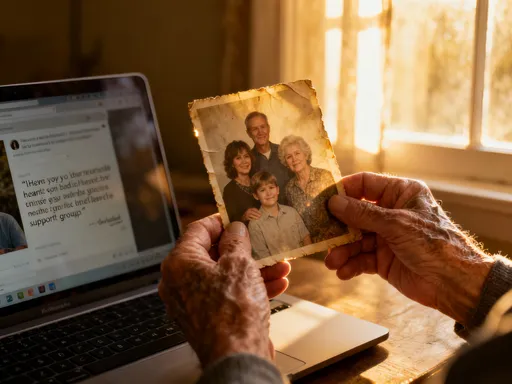
Then came the printed photos. She started printing her edited pictures—of herself with the dog, at the park with my nephew, even a selfie in her favorite armchair. She placed them in small frames around her living room. “I wanted to see myself looking happy,” she said. “Not just in albums, but every day.”
And she began exploring other apps. First, a weather app so she could check the forecast before her morning walks. Then a recipe app—she found a digital version of her old apple pie recipe and started trying new ones. “If I can edit a photo,” she said, “I can follow a recipe on a screen.”
It wasn’t just about technology. It was about confidence. Each small success built on the last. Editing a photo gave her the courage to be seen. Being seen gave her the courage to participate. Participating gave her the joy of connection. It was a chain reaction—one that started with a single tap on a bright, simple button.
How You Can Start This Journey Too
You don’t need to be a tech expert. You don’t need the newest phone or the fanciest app. All you need is one photo, one conversation, and a little patience. Start by asking: “Would you like to try making your photos look a little more like how you feel?” Not “look younger.” Not “look better.” But more like how you feel—alive, present, at peace.
Let them choose the photo. It could be an old one they’ve always disliked, or a recent snapshot that didn’t turn out right. Open the app together. Show them the one-tap tools. Let them press the buttons. Celebrate when the face brightens, when the colors come alive. Laugh when the app misreads the face and makes an ear disappear—then tap “undo” and try again.
The key is to focus on the feeling, not the result. Ask, “How does this look to you?” not “Do you like it?” Let them decide what’s enough. Some might want just a little brightening. Others might enjoy smoothing shadows. It’s not about standards. It’s about choice.
And don’t rush. If they only learn one button today, that’s fine. Tomorrow, they might try another. The goal isn’t mastery. It’s comfort. It’s the quiet joy of saying, “I did that,” and meaning it. This isn’t about digital perfection. It’s about emotional restoration. It’s about helping someone you love feel seen again—not through a filter, but through care.
The Bigger Picture: Tech That Truly Cares
Technology gets praised for speed, power, innovation. But the most meaningful tech isn’t the fastest or flashiest. It’s the kind that notices the quiet struggles—the moments of doubt, the small retreats from life. A photo app that helps an older adult feel confident again isn’t just software. It’s compassion coded into buttons and voice prompts.
When Grandma shows her friends her edited photos, she jokes, “Look at my glow-up!” They laugh. But I see the truth behind it. She’s not trying to be someone else. She’s finally comfortable being herself—on camera, in calls, in life. The app didn’t change her. It just removed the barriers that made her hide.
This is what technology should do: not replace human connection, but support it. Not create distance, but close it. Not impress us with features, but serve us with kindness. The best tools aren’t the ones that do the most—but the ones that help us feel more like ourselves.
Every time she takes a photo now, she doesn’t flinch. She smiles. She leans in. She says, “Ready when you are.” And when the picture comes out—soft, warm, true—she doesn’t hand the phone back and look away. She holds it. She looks. She says, “That’s me.”
And it is. Not perfect. Not younger. But seen. And that’s everything.