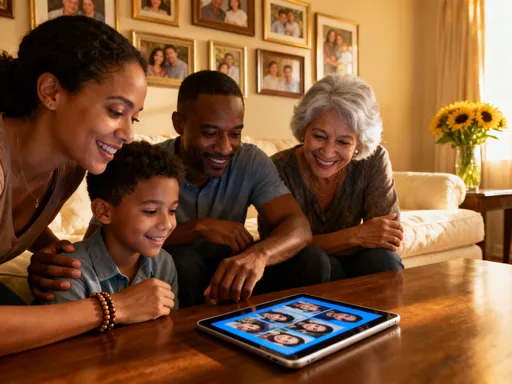
We’ve all had that moment—searching desperately for a voice note, a photo, a recipe from Mom, only to realize it’s gone. I felt that ache when my father passed, and with him, pieces of our family’s history seemed to vanish. I remember calling my sister, voice breaking, asking if she still had that recording of Dad singing at my wedding. She didn’t. Neither did I. The song was just… gone. That loss wasn’t just about a file. It was about losing a piece of who we were. But then I discovered something unexpected: not flashy apps, but quiet, caring online support groups where people were preserving memories together. This isn’t about data storage—it’s about heart. And it changed how I remember, share, and connect.
The Moment Everything Felt Lost
It happened on a rainy Tuesday. I was cleaning out a drawer—just one of those random days when you finally tackle the clutter you’ve ignored for years. And there it was: a stack of old cassette tapes labeled in my mom’s handwriting—"Family Gatherings, 1987," "Christmas Eve, 1991." I rushed to find a player, heart pounding. But when I finally got one working, the tapes were warped. Silence, or worse, a faint echo of laughter I couldn’t quite make out. I sat on the floor of my living room, tears mixing with the dust on the tapes. It wasn’t just about the sound. It was about realizing how fragile our memories really are. We think they’re safe because we remember them—but what about the next generation? What about the stories we never wrote down, the voices we never recorded, the recipes scribbled on napkins and lost in the laundry?
When my father passed, it wasn’t just his presence that left. It was the way he told stories—how he’d pause before the punchline, how he’d mimic my grandmother’s accent when he talked about her garden. Those details didn’t live in photos. They lived in moments, in tone, in the rhythm of his voice. And without them, the memories felt flat, like black-and-white photos missing their context. I started asking my siblings, "Do you remember when…?" and more often than not, the answer was no. Or a hesitant, "Sort of." That’s when it hit me: we weren’t just grieving a person. We were grieving a whole world of stories that were slipping away. And I knew, deep down, I couldn’t let that happen again.
Discovering the Unexpected Keeper of Memories: Online Support Groups
In the months after Dad’s passing, I found myself scrolling late at night, searching for anything that might help me feel less alone. One evening, I stumbled on a private Facebook group called "Healing Hearts: Grief and Memory." I wasn’t looking for tech solutions—I just wanted to talk to people who understood. But what I found surprised me. People weren’t just sharing their pain. They were sharing stories. Audio clips of their parents’ voices. Scanned copies of old letters. Photos with detailed captions: "This is Mom at the lake house, 1978. She’s wearing the yellow dress she made herself. She always said the zipper gave her trouble."
One woman posted a short recording of her father humming a tune he used to sing while fixing the car. Someone else replied, "My dad did that too—same song!" Another shared a scanned recipe card in her grandmother’s handwriting, with a note: "I finally typed this up and sent it to my daughter. Now she knows how to make the pie that always smelled like home." These weren’t just tributes. They were acts of preservation. And they were happening organically, in a space built for emotional support, not digital archiving.
I remember the first time I uploaded something—a two-minute video of Dad cutting the birthday cake at my son’s fifth birthday. I wrote, "He always said, ‘Make a wish, but don’t blow it out too fast—life’s too short for small moments.’" Within hours, three people had replied with their own stories about parents and birthdays. One said, "Now I’m going to record my mom telling that story." That’s when I realized: this wasn’t just about saving my memories. It was about inspiring others to save theirs. The group wasn’t a database. It was a living, breathing circle of care—where remembering was both an act of love and a shared responsibility.
Why Traditional Tools Fall Short
We’ve all tried the tech solutions. I had folders upon folders on my laptop labeled "Family Photos," "Old Videos," "Important Docs." But let’s be honest—how many of us actually go back in there? I once spent an entire Sunday trying to organize everything. I renamed files: "Beach Trip 2005 – Sarah’s 10th Birthday," "Mom’s 60th – Backyard BBQ." It felt good at the time. But a year later, I couldn’t find a single one. The truth is, most digital tools treat memories like data. Cold. Static. Lifeless. A photo is just a file. A voice note is just audio. There’s no context, no emotion built into the system. And without that, it’s easy to lose track—both literally and emotionally.
Cloud storage fills up. Hard drives crash. I lost a whole year of photos once when my external drive failed, and I hadn’t backed them up elsewhere. Apps like Notes or Evernote? I tried. But typing in memories felt like homework. "Describe the moment," the app would prompt. I’d write a sentence, then stop. How do you capture the warmth of your aunt’s kitchen, the smell of cinnamon and coffee, the way she’d hum while stirring the pot? Text couldn’t do it. Audio helped, but only if I remembered to press record. And even then, without someone to listen, it felt pointless. The tools were efficient, maybe. But they weren’t meaningful. They didn’t understand that memories aren’t just information—they’re emotion, identity, connection.
And then there’s the emotional weight. Sometimes, I’d open a folder of old photos and feel overwhelmed. There were too many. Too much history. Too much grief. I’d close the laptop and walk away. The tools didn’t help me process. They just held the data—and sometimes, that felt like a burden. I didn’t need another app. I needed a reason to keep going. I needed to feel like someone was with me. That’s what the online group gave me—not just a place to store, but a reason to share.
How Online Groups Simplify What Feels Overwhelming
One of the most beautiful things about these online circles is how they make memory-keeping feel doable. It’s not about doing everything at once. It’s about small moments, shared with people who care. In my group, someone started a thread: "What did your mom always say when you were scared?" I wrote down my mom’s phrase: "Close your eyes and count to three. By then, the fear will have moved on." Two other women shared the same advice from their mothers. Another thread asked, "What’s one recipe you wish you’d written down?" I posted my grandmother’s cornbread recipe—the one I always meant to learn but never did. Within days, three people had sent me variations they’d inherited. One even recorded a video of her mom making it, step by step.
These prompts did something powerful. They turned memory preservation into conversation. And conversation made it feel natural, even joyful. Instead of sitting alone at my computer, stressing over file names, I was exchanging stories with real people who got it. The group also made the technical parts easier. Someone shared a simple trick: use your phone to take pictures of old photos, then upload them to a shared album. Another member recommended a free app that converts voice memos into text, so you can search for keywords later. No one was showing off. No one was judging. It was all about helping each other, one small step at a time.
And because we were doing it together, I didn’t feel the pressure to be perfect. I didn’t need to digitize every photo or transcribe every story. I just needed to show up. When I posted a shaky video of my dad’s old camcorder footage—slightly blurry, sound crackling—no one said, "Fix the audio." They said, "Thank you for sharing this. I can hear his laugh. That’s all that matters." That kind of acceptance made me want to keep going. It wasn’t about quality. It was about presence.
The Hidden Power of Shared Rituals in Digital Spaces
What I didn’t expect was how these groups created their own quiet rituals. In mine, we started a tradition: the first Sunday of every month is "Memory Sunday." No pressure, no rules. Just an open invitation to share one memory—any memory. A photo. A voice note. A sentence. Sometimes, it’s joyful. A child’s first word. A favorite vacation. Other times, it’s tender. A last conversation. A voice we miss. But every time, it’s meaningful.
One woman began hosting monthly voice check-ins. She’d send a 5-minute audio message to the group: "Hi everyone. This month, I’m remembering my dad’s garden. I’m standing here now, and the roses are blooming just like they did when he was alive." Others would reply with their own voice notes. Hearing real voices—hesitant, emotional, warm—made the connection deeper than text ever could. Another member created a shared digital album for holidays. Every Thanksgiving, she’d post a photo of her family’s table and ask others to do the same. Over time, that album became a mosaic of traditions, laughter, and love.
These weren’t formal systems. There was no app, no complex setup. Just intention and consistency. And that’s what made them stick. Because we did them together, they didn’t feel like chores. They felt like visits. Like checking in with family. The emotional safety of the group made it easier to be vulnerable, to share the things we were afraid to say out loud. And in that safety, memories weren’t just saved—they were honored.
Building Your Own Circle: A Simple Start
You don’t need a big group or fancy tech to start. I promise. The first step is simply deciding to care. Think about who in your life might want to remember the same things you do. A sibling. A cousin. A close friend who loved your parent like their own. Start small. Create a private group on a platform you already use—like a closed Facebook group or a secure messaging app like Signal or WhatsApp. Name it something warm: "Our Family Stories," "Mom’s Voice Lives On," "The Kitchen Table Memories."
Then, begin with one theme. Don’t try to do everything. Pick something simple: "Favorite meals from childhood," "Voices we miss," "Photos from the old house." Share one thing—a photo, a voice memo, a scanned letter. Write a sentence about why it matters. Then invite one other person to add theirs. No pressure. No deadlines. Just an open door.
If tech feels intimidating, remember: you don’t need to be an expert. Use your phone’s camera. Hit record. Type a few lines. That’s enough. If you’re worried about privacy, keep the group small and private. Most platforms let you control who sees what. And if someone doesn’t want to join, that’s okay. This isn’t about everyone—it’s about the ones who do.
One of the most touching moments in my group happened when my niece, who was only five when my dad passed, listened to a voice memo I’d shared. She said, "That’s Grandpa’s laugh. I didn’t know I still remembered it." That’s the power of starting small. You’re not just saving memories. You’re giving them back to people who thought they’d lost them forever.
More Than Memory: Rediscovering Who We Are
Over time, something shifted. The group stopped feeling like a project and started feeling like home. The stories we shared didn’t just live in files—they lived in us. My nephew started asking for "Grandma’s stories" before bed. My cousin began cooking her mother’s recipes, even though she’d always said, "I’ll never get it right." But she did. And when she shared a photo of the dish, someone in the group wrote, "You’ve brought her back to the table."
These moments reminded me that memory isn’t just about the past. It’s about identity. It’s about knowing where you come from, so you can understand who you are. When my daughter heard her great-grandmother’s voice in a recording—soft, firm, full of wisdom—she said, "She sounds like me." That connection, that sense of belonging, is priceless. And it’s not locked in a hard drive. It’s alive, because we chose to share it.
The group became more than a backup. It became a living storybook. A place where grief and joy could coexist. Where laughter could follow tears. Where we could say, "I remember," and know someone else did too. And in that knowing, we found healing. Not because the pain went away—but because we weren’t carrying it alone.
Where Technology Meets Tenderness
Looking back, I realize the most powerful technology wasn’t the apps or the cloud or the scanners. It was the human heart. The willingness to listen. To say, "Tell me more." To hold space for someone else’s memories as if they were your own. Online support groups didn’t give me a system. They gave me community. And in that community, preservation became something sacred—not because it was perfect, but because it was shared.
We don’t need to save every file or record every word. We just need to care enough to try. To press record. To scan that recipe. To write down what Mom always said. And to share it with someone who will listen. Because in that act, we do more than remember. We connect. We heal. We pass on love in its truest form—not as grand gestures, but as quiet, everyday acts of care.
So if you’re sitting there thinking, "I’ve lost too much already," I want you to know: it’s not too late. Start with one memory. One voice. One photo. Share it with one person. Let that be enough. Because the truth is, we don’t need high-tech solutions to save what matters. We need hearts willing to hold on—together. And that, more than any app, is how we keep our stories alive.